The age-old debate between glassware and metal tray pans is widely discussed in the baking world, as accuracy plays a pivotal role when it comes to producing scrumptious treats.
It’s important to be mindful of what type of pan works best for your recipe; since the perfect tray will make all the difference. Ultimately, each type of cookware has its own set of advantages and features – so deciding which one suits your needs depends entirely on how you intend to bake.
Glassware
Generally, glass tray pans are heavier as compared to metal tray pans.
Due to that, glassware takes longer to heat up and cool down compared to metal. This is a good feature as it is capable of retaining heat for a longer period. It is best used in situations where one would like to keep baked goods warm at the table.
Being able to retain heat for a longer time, glassware tray pans can reduce the baking time as baked goods in it tend to bake more quickly than metal. Oftentimes, you may discover that the edges and exterior have browned much faster than the inside of your goods is cooked through. It is important to use a lower oven temperature when using glassware tray pans so that your baked goods do not end up burning.
With that said, be aware that sudden temperature changes can cause the glass tray pan to crack due to its inability to cope with such an abrupt transition.
Glassware is crafted from non-reactive materials, so you never have to worry about it affecting the taste of your treats. So, if an acidic ingredient is part of your recipe, make sure to opt for a glass tray pan to keep your flavours intact.
Last but not least, its transparency also makes baking easier. With glassware, you can inspect your baked goods from all angles with utmost ease.
When to Use Glassware
Here is a quick list of what kind of baked goods should you use glassware tray pans with:
- Baked meat dishes
- Bread puddings
- Cobblers
- Crisp and crumbles
- Casseroles
- Pies
- Anything acidic
Metal
Metal tray pans are lighter and generally have more impressive heat tolerance.
Being a great heat conductor, metal tray pans are capable of heating up and cooling down faster. Such a feature is great when one likes to consume baked goods shortly after it comes out of the oven. Metal tray pans are also perfect for achieving a nice crisp and browning on your baked goods.
Surprisingly, metal tray pans bake goods slower as compared than glassware tray pans. So it is advisable to let your oven timer run a few extra minutes to ensure your baked goods are cooked thoroughly.
It’s important to remember that the external shade of a metal tray pan can have an impact on how its contents are cooked. Darker-hued pans absorb more heat, meaning your goods will be baked quicker but with the risk of becoming over-browned in the process. Many professionals choose lighter-toned trays which maintain just enough warmth for their baking projects.
Unfortunately, metal tray pans are reactive to acidic ingredients. Such a reaction can lead to a metallic taste, affecting the original taste of the baked goods. This is why you should use glass tray pans when baking a recipe with highly acidic ingredients.
When to Use Metal
One is suggested to use metal tray pans when baking:
- Brownies
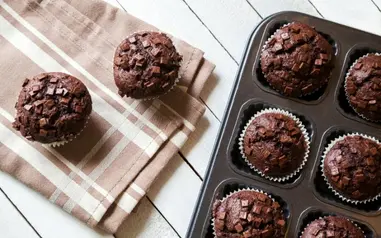
- Muffins
- Biscuits
- Rolls
- Cookies
- Cookie bars
- Quick bread
- Cakes
Glassware versus Metal?
It is best to choose your tray pans based on the recipe and ingredients.
Glass tray pans are perfect when cooking acidic ingredients. Not to mention, it also provides greater visibility which makes it easy for one to inspect the bottom and sides of the baked goods. This makes it easier for one to tell when the food is done baking.
If you are looking to bake something with a crisp exterior, make sure to pick metal tray pans. Metal conducts heat better than glass and transfers the heat quickly and evenly. This helps you get an even texture and desired colour on your dish.