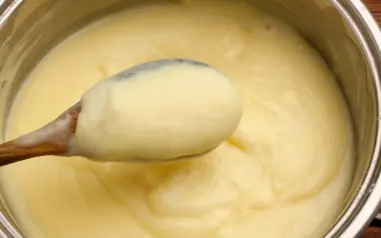
Custard is a type of creamy dessert enjoyed for centuries. It is made by combining milk or cream with eggs, sugar, and flavourings such as vanilla. Custard can be served on its own or used as a filling in pastries, tarts, and other baked goods.
History of Custard
The origins of custard can be traced back to ancient Rome, where it was known as “custos” meaning “guardian.”
In the Middle Ages, custard was popularised by European chefs, who added spices like nutmeg and saffron to enhance the flavor. By the 16th century, custard had become a staple in many European countries and was often served as a dessert for the upper class.
During the 17th and 18th centuries, custard evolved to become more delicate and refined. The French even developed a special type of custard called “creme anglaise”, which is used in many classic French desserts, such as creme brûlée and eclairs.
Today, custard continues to be enjoyed all over the world in various forms and variations.
Types of Custard
1) Baked Custard
This type of custard is made by baking a mixture of milk, eggs, sugar, and flavourings in the oven. The result is a rich and creamy dessert with a smooth consistency.
Some popular baked custard desserts include crème brûlée, flan, and bread pudding.
2) Stirred Custard
Stirred custard is also known as “soft-set” or “custard sauce.” It is made by cooking a mixture of milk, eggs, and sugar over low heat until it thickens. This type of custard is often used as a topping for fruits, cakes, and other desserts.
Variations of stirred custard include pastry cream, which is used as a filling for pastries and tarts, and custard ice cream, which is made by freezing the mixture.
3) Instant Custard
Instant custard is a quick and easy version of custard that can be prepared with just hot milk. It typically comes in powdered form and can be easily mixed into a smooth consistency without the need for heating or cooking.
This type of custard is often used as a topping for cakes, pies, and other desserts.
How Does Custard Affect Baked Goods?
Custard not only adds flavor to baked goods, but also affects their texture and moisture levels.
When used as a filling in pastries and tarts, custard adds a creamy and rich texture that pairs well with the flaky crust. In cakes and cupcakes, custard can be used to create a moist and dense texture.
Custard can also act as a binding agent in baked goods, helping hold ingredients together and prevent crumbling.
Tips for Using Custard in Baked Goods
- Use chilled custard when filling pastries or cakes to prevent it from seeping into the dough or batter.
- Add flavourings such as vanilla extract, nutmeg, or cocoa powder to enhance the taste of your custard.
- To thicken custard quickly, you can add a small amount of cornstarch before cooking or mix in some instant custard powder.
- When making baked custard, be sure to use a water bath to prevent the custard from curdling and ensure it cooks evenly.
Takeaway
Custard is a versatile and delicious baking ingredient that can add flavor, texture, and moisture to your baked goods. From classic desserts like crème brûlée to simple toppings for cakes, there are many ways to incorporate custard into your baking.
With these tips in mind, you can experiment with different types of custard and create delectable treats that will satisfy any sweet tooth.